
Chastity belt is one of those terms that sounds precise but is actually used in several different ways. Depending on the conversation, it might mean a historical claim, a fantasy symbol, a belt-style restraint device, or simply broad shorthand for modern chastity practice.
That is why the term creates so much confusion. People think they are asking one question, but they may really be asking about history, device design, consensual power exchange, or modern product comparison.
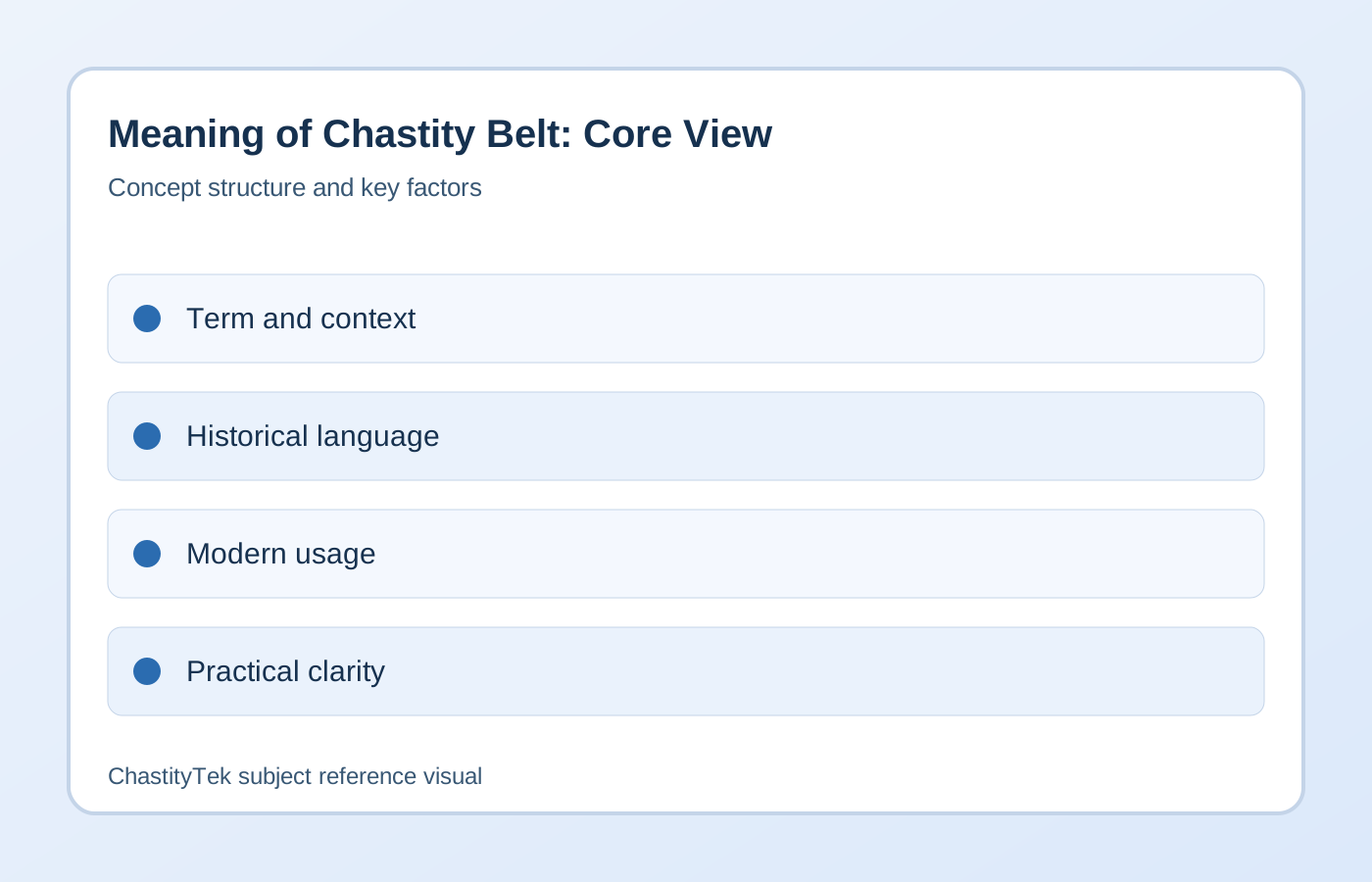
Quick Definition
In plain language, a chastity belt is a restraint concept designed to limit direct genital access until agreed conditions for release or removal are met. In modern use, the phrase is often broader than the literal hardware.
That last point matters. Many searchers type chastity belt even when the device they eventually buy is a cage, a flat-profile restraint, or another modern wearable system.
The Four Most Common Meanings Behind the Term
1. Historical or medieval meaning
Some people use the phrase to ask about the famous medieval story: Were people really locked into belts for fidelity? That is a history question, not a device-shopping question.
2. Modern hardware meaning
Others use chastity belt to describe any restraint that controls genital access. In that context, the phrase overlaps with cages, belts, panels, harnessed systems, and hybrid designs.
3. Relationship-dynamic meaning
In some communities, the phrase can describe the whole control structure, not just the object. It becomes shorthand for rules, keyholding, denial, obedience, or ritualized access.
4. Search-language shortcut
A lot of people simply do not know the exact product terminology yet. They start with chastity belt, then later learn the more useful distinctions between male chastity cage, female chastity belt, flat cage, ring size, or belt-style system.
Why the Term Gets Misunderstood
The word belt suggests one obvious image. That image usually comes from medieval folklore, museum displays, fetish art, or porn rather than from careful modern device language.
In real discussions, that image is too narrow to be useful. A person searching for the meaning of chastity belt may be trying to answer any of these:
- Is it a real historical object?
- Is it the same thing as a chastity cage?
- Is it used by men, women, or both?
- Is it mostly fantasy, or do people actually use devices like this?
- What does it mean inside a BDSM relationship?
Those are not the same question, so a strong definition page has to separate them.
Is a Chastity Belt the Same as a Chastity Cage?
Not exactly, although casual conversations often blur them together.
A chastity cage usually refers to a smaller device focused on the penis. A belt-style system often implies a broader structure around the waist, pelvis, or front panel. In practice, many men who search for a chastity belt for men end up comparing cages because cages are usually easier to fit, hide, and maintain.
That is why terminology matters. Broad terms are useful for discovery. Specific terms are useful for decisions.
Modern Use Cases Behind the Search Term
Today, people typically search the term from one of these angles:
- curiosity about the historical story
- comparison shopping for a device
- interest in BDSM or orgasm-control dynamics
- a desire to separate fantasy from reality
- uncertainty about whether belt-style or cage-style hardware fits their body better
Once those motives are clear, the topic becomes much easier to explain.
Better Vocabulary for Real Decisions
If you want clear answers instead of vague marketing language, these terms are far more useful than the word belt alone:
- fit: how the device sits and moves on the body
- retention: how well it stays in place
- contact points: where pressure or friction happens
- hygiene access: how easy cleaning and care are
- profile: how visible or bulky it is under clothing
- protocol: the rules, timing, and communication around use
These are the terms that actually help people decide whether a setup is realistic.
What the Meaning Page Should Lead You To Next
Once the definition is clear, the best next question is usually one of these:
- What Is a Chastity Belt and How Does It Work in Real Life?
- What Is a Male Chastity Belt and How Does It Compare to a Chastity Cage?
- What Is a Female Chastity Belt and How Is It Used Safely?
- What Is the History of the Chastity Belt? Myths, Records, and Modern Reality
Those pages turn the loose term into something much more concrete.
Frequently Asked Questions
Does chastity belt always mean a historical metal device?
No. In modern search behavior it is often umbrella language for a much broader category of consensual restraint ideas and devices.
Why do people switch between belt and cage?
Because belt is the broad entry term and cage is often the more practical term once the discussion becomes about fit and wearability.
Is the term gender-specific?
No. It appears in male, female, and mixed-context discussions, though the device questions change depending on anatomy and use case.
What is the biggest misunderstanding?
The biggest mistake is assuming the phrase points to one exact design instead of several overlapping histories, fantasies, and modern use patterns.
What should someone read after this page?
For most readers, the best next step is the real-life explainer page, followed by the body-specific fit guides.
Practical Takeaway
If you came here asking what chastity belt means, the cleanest answer is this: it is a broad label for controlled-access restraint ideas, and the exact meaning depends on whether the conversation is about history, modern devices, or consensual relationship structure.
The phrase is useful as a starting point. It is not detailed enough to make a good buying or safety decision on its own.

If you are ready to move from meaning to implementation, the next page to open is What Is a Chastity Belt and How Does It Work in Real Life?.